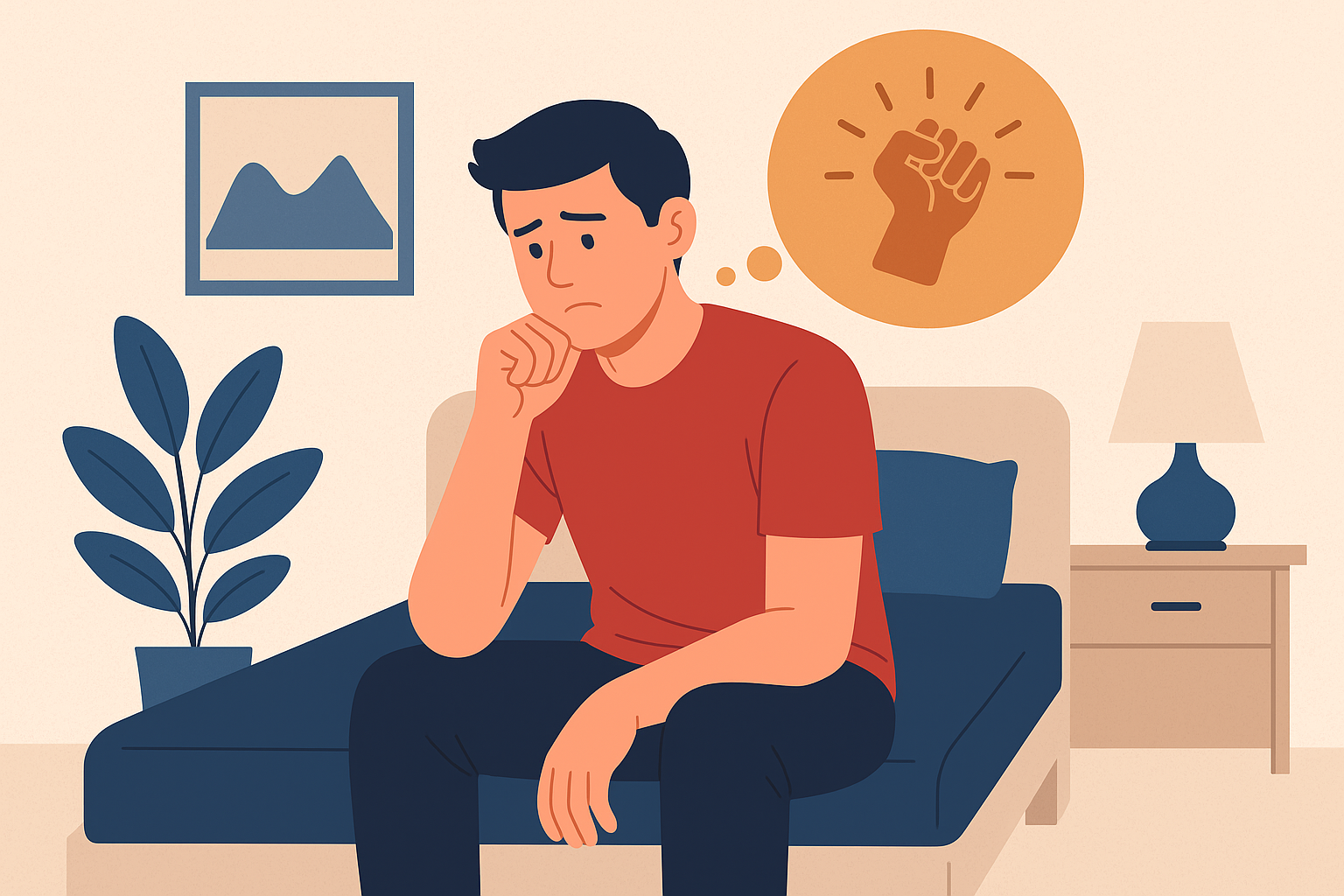
Men masturbate for many reasons, such as relieving stress, sexual release, exploration, or body understanding. If you’re looking for “how to deal with masturbation for men,” you’re not alone. In this post, I’ll share science-based techniques to find healthy moderation, rather than trying to force it out of your life.
Table of Contents
What Is Masturbation? Why Do Men Do It?
Masturbation is any act of sexual self-stimulation, often to the point of orgasm. This might include using the hands, sex toys, devices, or other techniques to release sexual tension, reduce stress, and fulfill biological drives.
In short, masturbation is touching oneself for sexual satisfaction, which some men do for biological release, stress reduction, fantasy exploration, and body awareness.
Men masturbate for a variety of reasons, both physical and psychological. According to studies, it’s the majority of men and is considered healthy. Some of the top reasons men masturbate are listed below:
- To Relieve Stress: Masturbation releases hormones which help reduce stress levels
- Exploration and Discovery: Men may discover what feels good and use that knowledge with future partners
- To Avoid Loneliness or Boredom: Masturbation becomes a routine or habit for many men
- Sexual Release: When they don’t have partners, men use masturbation as an outlet
Potential Benefits of Masturbation
Masturbation isn’t all bad. For men, it has potential health benefits and key psychological benefits:
- It’s a natural and healthy way to release sexual tension
- Stress reduction can help men focus on work, goals, and relationships
- Improved sleep due to post-orgasmic relaxation effects
- Identify sexual response and better understand one’s preferences
- Release built-up sexual energy, reducing restlessness
Learning to manage masturbation should never feel like a requirement to feel ashamed, but healthy limits will reduce potential guilt and anxiety.
Understanding Masturbation Addiction
The problem is not masturbation, but when it becomes uncontrollable, excessive, or when guilt and anxiety follow.
Men have issues with masturbation when:
- You feel constant sexual urges that distract you from productivity or social interaction
- You feel you’re losing control and can’t regulate the habit
- Your only sexual outlet is self-gratification, with no partner involvement
- You feel shame or anxiety which causes depression
- You use it out of boredom, loneliness, or as an automatic habit
Masturbation becomes an addiction when psychological or physical withdrawal symptoms are present. This is rare for sex in general, but can still occur if masturbation is frequent and compulsive.
Simple Guidelines: How to Deal with Masturbation for Men
Identify Your Masturbation Triggers
Before learning how to deal with masturbation for men, you must identify your primary masturbation triggers. Is it an automatic response to boredom, stress, or lack of partner intimacy?
Does it occur in a specific time of day, or when you’re alone? Asking why and when will help you identify when to avoid certain activities to prevent excessive masturbation.
The 80/20 rule for change says 80% success is often enough, so find the biggest triggers you can avoid or modify.
Set Healthy Goals
Your goals are an important aspect of behavior change. Be specific, measurable, and realistic in your goal setting. For example, you might set an intention to masturbate fewer times per week, or once per week.
Goals also need to be flexible and adjusted according to reality. Expect setbacks or regression in behavior change, and you’re more likely to maintain progress.
The best goals for moderation don’t expect perfection or abstinence.
Build Healthy Habits
Any habit thrives on time gaps in your day when you have more free attention. The key to learning how to deal with masturbation for men is by filling those time gaps with healthy activities.
This can include exercise, meditation, picking up new hobbies, reading, social activities, hobbies, and other fulfilling activities that reduce idle time. Habits are like weeds. They grow stronger in empty soil.
Remove Primary Masturbation Triggers
Pornography is the most common masturbation trigger, which suggests avoiding it in daily life. Setting screen-free time before bed, filtering devices, or using browser blockers are some examples.
If you have a specific hobby or activity that leads to masturbation, try changing it.
Practice Mindful Awareness
Mindfulness is a process of bringing conscious awareness to our thoughts, feelings, and physical sensations. When you feel the urge to masturbate, practice observing this urge without judgment for a minute or two, then focus on a different activity.
Masturbation urges come and go, and most pass when you face them with awareness.
Improve Your Sleep Schedule
If you have a habit of late-night masturbation, try going to sleep earlier, reducing screen time before bed, and sticking to a strict sleep schedule. Most healthy adults require 7-9 hours of sleep per night, so a sufficient amount of sleep can reduce extra urges.
The best way to learn how to deal with masturbation for men is to find healthy sleep and routine.
Exercise, Diet, and Health
Exercise has a variety of positive psychological benefits, including an improved mood, higher energy, better self-image, and reduced stress. Men who exercise regularly report fewer masturbation urges in some studies.
Diet also matters, including both what you eat and when you eat it. Improving diet and exercise is an important part of overall health and behavior change.
Spend More Time with Friends and Family
Humans are social beings, and most sexual desire is easily fulfilled with friends or a sexual partner. Finding supportive communities, like hobby or sports groups, is often highly effective in reducing masturbation dependency.
Of course, this is not the same as a healthy romantic relationship, and many people masturbate more after breaking up with a partner.
Seek Professional Support
If you continue to struggle with masturbation despite self-help and behavior change strategies, it may be time to seek professional support. Therapists or counselors can help you explore the reasons and emotions behind your masturbation urges, develop healthier coping mechanisms, and build motivation and self-discipline.
Self-Talk, Visualization, and Self-Control
Rewiring the brain with self-talk is a helpful process in developing self-control, including over masturbation. Use positive affirmations such as “I am in control of my urges” or “I release tension through healthy channels.”
Visualization is also powerful and can imagine yourself in situations where you resist or moderate your masturbation urges.
Behavioral psychology techniques, such as rewards, have also been shown to be effective. This can be as simple as rewarding yourself for reaching a certain goal, such as a full week without masturbation, with a favorite meal or activity.
Spiritual or Religious Considerations
Sexuality is often taboo in many spiritual traditions and religions, and some men feel guilt or shame from this background. If masturbation is against your values or belief systems, you have every right to work on it and build more self-control.
The key is balance between your personal values, and it may be helpful to seek supportive resources or communities that share your views.
Summary: How to Deal with Masturbation for Men
In summary, “how to deal with masturbation for men” is an important question, as masturbation can get out of hand for many men in today’s age.
By following practical guidelines, such as identifying your triggers, setting specific goals, building healthy habits, and avoiding triggers, you can learn how to deal with masturbation. At the same time, don’t forget to build a healthy relationship with sex.
Seek professional help if self-help isn’t enough, and remember that masturbation is natural and healthy in moderation. With the right tools, you can learn self-control and enjoy the psychological benefits of less masturbation, more productivity, and improved relationships.
You can always feel free to reach out to a professional if you need help finding support.