
Sex toys may seem like a new creation, but the human urge to enhance pleasure is not. For thousands of years, in every culture and every corner of the world, people have used objects and techniques to understand and explore their sexuality. From primitive smooth stone dildos found in ancient caves, to today’s Bluetooth connected vibrators and gender expansive pleasure products, sex toys are a unique window into the human experience of curiosity, repression, liberation and self-acceptance.
In this post, we’ll explore some of the most interesting, surprising and significant moments in sex toy history.
Table of Contents
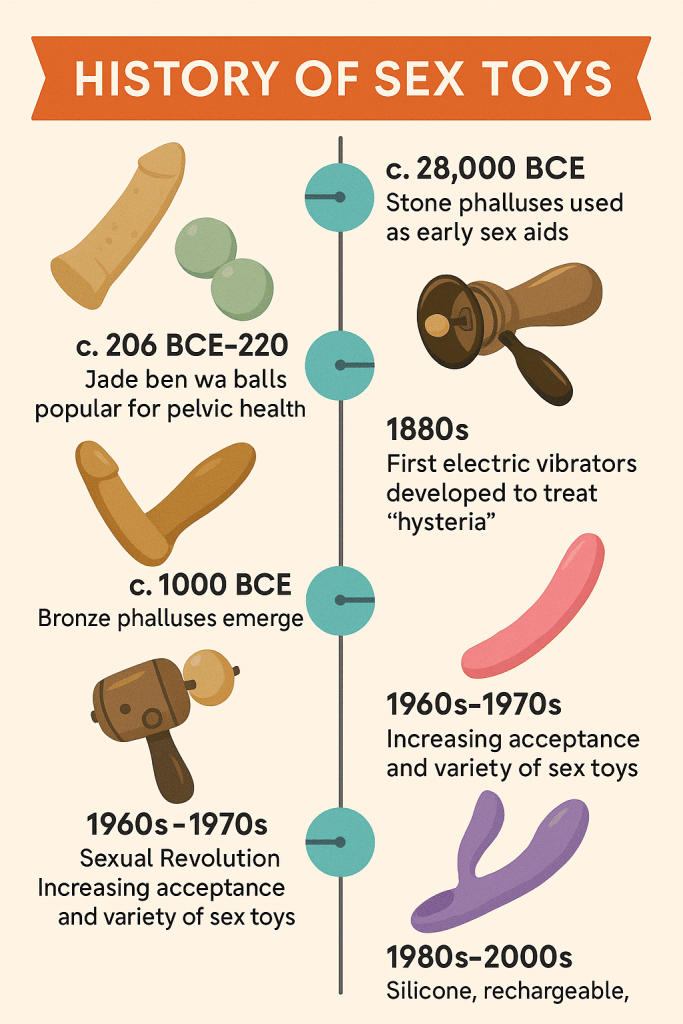
Ancient Civilizations: Pleasure Is Prehistoric
The oldest known sex toys in the world are over 28,000 years old. One of the most well-known is the Hohle Fels phallus, discovered in Germany. It is made of siltstone and it is rather phallic. This object might have also been used for sexual stimulation. As with many ancient artefacts it may have served symbolic, ceremonial or ritualistic purposes. But its shape and wear suggest that many archaeologists see it as a pleasure device.
Sexuality in early Mesopotamia, ancient Greece, and Rome was acknowledged in society. Ancient Greeks have written texts that mention olisbos, a dildo made from leather or stone. These were used mostly by women whose husbands were absent, or by women in the sex work profession. Romans not only accepted the phallic shape but also revered it. They worshipped erect penises as protective fertility talismans which they represented in frescoes statues and amulets.
Emperors and royal women of ancient China utilized jade dildos and pelvic muscle balls. Traditional Chinese medicine maintains that these tools improve sexual vitality and energy flow. In India, The Kama Sutra, a compilation of ancient erotic literature written around 3rd century, discussed methods and tools to enhance pleasure for men and women.
Middle Ages: Suppression and Silence in the West
Christianity took hold in Europe during the Middle Ages and ushered in an era of sexual shame. If sex for women wasn’t directly connected to procreation in a marriage, it was dangerous and sinful. During that period women needed to suppress their sexual desires. The history of sex toys in Europe remains elusive due to their rare mention in Western writings before the modern age.
Documents from Western Europe indicate that women were constrained by rigid gender expectations but secretly shared intimate practices and toys between themselves. In Middle Eastern poetry, sensuality was a common theme, often wrapped in metaphor.
The Victorian Era: Moral Panic Meets Mechanical Innovation
The 19th century brought more sexual repression, particularly in Britain and the US. The first vibrator was born in this century, ironically through the field of medicine.
Doctors at the time prescribed treatments for what they called “hysteria”, a condition with vague symptoms attributed to emotional excess or sexual frustration. One form of treatment involved medical professionals manually stimulating women to the point of orgasm (called “hysterical paroxysm” at the time) as a way to “calm them down”. Since this treatment was labour-intensive and tiring, machines were invented to do the job.
The first electric vibrators, such as the one patented by Dr. Joseph Mortimer Granville in the 1880s, were considered health tools. They could be purchased in department stores and women’s magazines advertised them for sale. Sexual connotations were downplayed; the word was “massager”.
20th Century: Sexual Revolutions and Legal Battles
The first half of the 20th century saw the vibrator used cautiously. While they could be sold as health devices they still carried the shame of sex, and obscenity laws in many countries (like the US) prevented the shipment or sale of anything “indecent”.
But the first waves of change started shifting that in the 1950s and 60s, thanks to the ground-breaking research of sexologists like Alfred Kinsey, and Masters and Johnson. Doctors and women’s health activists were openly discussing masturbation, orgasm inequality and a need for more comprehensive sexual education. In 1977 Good Vibrations, the feminist-run sex toy store, opened in San Francisco and for the first time started selling products in a clean, shame-free environment.
Erotic literature, movies and porn videos were also pushing boundaries and creating new markets. Sex shops started to open but were often more taboo and less accessible. A number of US states, like Alabama and Texas, passed laws outright prohibiting the sale of sex toys, on the grounds they were immoral. These laws remained on the books well into the 2000s and had to be challenged in court.
The Digital Age: Tech Meets Pleasure
Sex toys have come a long way in the 21st century. They are app-enabled, responsive to AI, tailored by sex and gender, designed in collaboration with medical and engineering experts as well as a diverse range of people of all genders, ages and sexual preferences.
Brands are also being much more open about what sex toys are used for. Instead of secrecy and shame they are transparent and honest about the products they sell and the reasons why. Sex is a part of health and these products offer the opportunity to experience more pleasure and to help more people feel comfortable and good in their bodies.
Bluetooth vibrators make it possible for long-distance couples to connect through simultaneous play sessions and smart sex toys allow for biofeedback sensors and customisable stimulation. Entire platforms are being built around sexual wellness coaching and education.
Designers are prioritising accessibility and inclusion in design. Creating products that are suited to people with disabilities, gender non-conforming, ageing consumers as well as everyone and anything in between. Brands are using gender-neutral language and body-positive branding.
Cultural Differences and Global Trends
Sex toys are accepted and accessed very differently depending on where in the world you are. In some countries, it is widely available in drugstores and department stores, while in other countries, they are illegal or strictly regulated. Traditional values, religious views and legal systems impact the way people access and discuss pleasure in all parts of the world.
Global interest is on the rise. The sex tech industry is expected to be valued at over $30 billion and is growing significantly in areas like East Asia, Latin America, and parts of Africa. Social media, online education, and discreet shipping have made access easier and more private than ever before.
Conservative societies are seeing small revolutions in pleasure exploration. More women are claiming their right to pleasure and more men are exploring their sexuality beyond traditional expectations. More people of all genders and sexualities are embracing pleasure free of shame in the name of curiosity and consent.
Lessons From History
The history of sex toys is a human history. Human people who were curious and not afraid to ask questions. Human people who wanted to break the rules and challenge the powerful. Human people who were searching for love and connection.
Each major advancement in sex toy manufacturing demonstrates broader discussions surrounding human nature and self-identification. How do we balance desire, dignity and discovery? Sex toys represent adult products that demonstrate our ways of expressing human existence.
Final Thoughts
Sex toys have evolved from sacred artifacts and secretive tools into luxury items that represent personal empowerment. Humans have a permanent need for physical intimacy and pleasure even though technology and cultural norms continue to evolve. Pleasure is as old as time itself.
As we look to the future, the future of sex toys is looking brighter than ever. Smarter, safer, more inclusive, and more integrated with the way we talk about health and happiness, the story of sex toys is not just about sex. It is a story about freedom, creativity, and the courage to be human.